
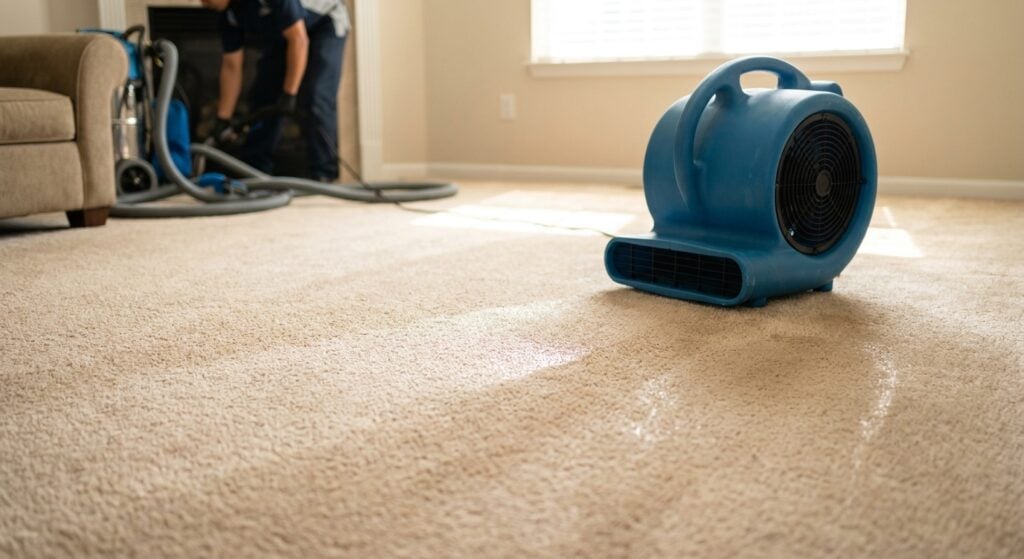
A professionally cleaned carpet typically dries completely in 6 to 12 hours. This duration is a direct function of the cleaning method used, the level of ventilation in the room, and the carpet’s material composition. Methods like hot water extraction require more drying time than low-moisture techniques due to higher water saturation. The bottom line is that multiple technical factors control the final drying time.
The Core Drying Factors Explained
Carpet drying is fundamentally a process of evaporation. The rate at which water molecules leave the carpet fibres and enter the air is governed by specific environmental and physical conditions. Understanding these variables allows for a predictable and optimised drying process.
Key factors that determine the drying speed include:
- Cleaning Method: Hot water extraction (HWE) uses significantly more water than Very Low Moisture (VLM) systems, extending drying times.
- Airflow and Ventilation: Increased air movement across the carpet surface accelerates moisture evaporation.
- Ambient Humidity and Temperature: Lower indoor humidity and warmer temperatures speed up the drying process.
- Carpet Specifications: The density of the pile and the type of fibre influence water retention.
Managing these elements correctly is the difference between a 6-hour dry time and a 24-hour problem.
Technical Deep-Dive: Cleaning Methods and Water Saturation
The specific cleaning equipment and methodology directly correlate to the volume of water pushed into your carpet’s pile and backing. This is the single most significant factor we control as professionals. Different techniques result in vastly different saturation levels and, therefore, drying times.
Hot Water Extraction (HWE)
HWE, often called ‘steam cleaning‘, operates by injecting high-pressure hot water into the carpet, then immediately extracting the dislodged dirt and water with a powerful vacuum. While highly effective for deep cleaning, its reliance on water saturation means a longer drying period is necessary. Professional equipment with high-performance vacuum motors is essential to minimise residual moisture.
Accelerating Evaporation in Your Space
Once the cleaning is complete, you can actively influence the drying environment. Proper post-cleaning protocol prevents issues like microbial growth or stain reappearance. Taking a few simple steps can significantly reduce the overall drying time.
To accelerate drying post-service, you should:
- Maximise Air Circulation: Use ceiling fans, portable fans, or your HVAC system’s ‘fan only’ setting to keep air moving over the carpet surface.
- Control Humidity: Open windows if the outside air is dry and not humid. In humid conditions, a dehumidifier is a more effective tool.
- Limit Foot Traffic: Avoid walking on the damp carpet to prevent soil transfer and fibre compression, which can trap moisture.
Precision Solutions with Carpet Cleaning Central
Our technicians assess every factor, from carpet type to indoor humidity, to ensure the most efficient drying outcome. We use specialised equipment calibrated to minimise water retention without compromising on deep cleaning results. Get an accurate quote based on a technical assessment of your needs by clicking the button below.
FAQs
Can I walk on the carpet while it’s drying?
It is best to avoid heavy foot traffic for at least 6 to 8 hours. If you must walk on it, use clean socks or clean, soft-soled indoor shoes to prevent transferring dirt onto the clean, damp fibres.
Why does my carpet smell musty after cleaning?
A persistent damp or musty smell indicates that the carpet is taking too long to dry, creating an environment for microbial growth. This is often due to poor ventilation or excessive water left in the carpet backing from less powerful equipment.
Does the type of carpet fibre affect drying time?
Yes, significantly. Natural fibres like wool can absorb more moisture and take longer to dry than synthetic fibres like nylon or polyester, which are less absorbent.
Should I use a heater to speed up drying?
Using a heater can help, but it must be paired with good ventilation or a dehumidifier. Heating a sealed, damp room will only increase the air’s humidity, slowing down the evaporation process rather than speeding it up.