Choosing between hot water extraction (steam cleaning) and dry carpet cleaning depends on fiber composition, soil levels, and desired turnaround time. For deep restoration of synthetic carpets in high-traffic areas, hot water extraction is superior methodology. Conversely, for routine maintenance or moisture-sensitive natural fibers like wool, low-moisture dry cleaning is the appropriate protocol.
Understanding Steam Cleaning (Hot Water Extraction)
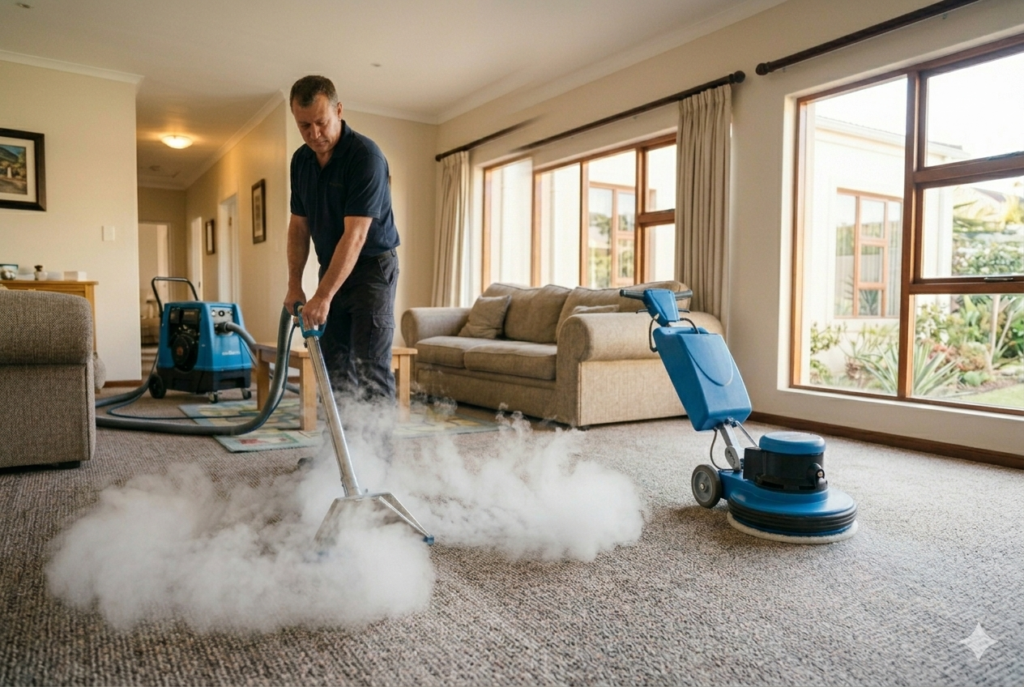
Hot Water Extraction (HWE), often termed “steam cleaning,” is the industry-standard restorative method for deep-cleaning synthetic carpets like nylon and polyester. The process involves injecting a pressurized solution of hot water (60–100°C) and calibrated agents deep into the pile to emulsify oils and particulate matter, which are then simultaneously removed by a high-powered vacuum.
In the South African market, this method is essential for maintaining manufacturer warranties, such as those from Belgotex, as it effectively eliminates microscopic allergens and bacteria. A professional application includes pre-conditioning and a neutralizing pH rinse to prevent rapid re-soiling, with drying times typically ranging from 6 to 24 hours depending on local humidity and ventilation.
What is Dry Carpet Cleaning? (Low-Moisture Methods)
“Dry” carpet cleaning encompasses very low-moisture (VLM) systems like encapsulation and bonneting, engineered for rapid drying and interim maintenance in high-traffic environments. Encapsulation uses crystallizing polymers to trap soil for removal via vacuuming, while bonneting utilizes a rotary machine and absorbent pads to scrub surface fibers.
While these methods lack the deep-cleaning depth of hot water extraction, they use a fraction of the water, allowing foot traffic to resume within one to two hours. This makes VLM techniques an ideal, residue-free solution for 24/7 commercial facilities where minimal downtime is a operational necessity.
Steam vs. Dry Carpet Cleaning: Key Differences
The primary distinction between carpet cleaning methodologies lies in whether they use thermal flushing for deep restoration or chemical binding for rapid maintenance. Choosing the correct approach requires balancing the need for deep contaminant removal against the operational requirements of your space.
- Cleaning Depth and Intensity: Hot Water Extraction (HWE) provides a restorative clean by flushing deep-seated grit and allergens from the base of the pile, whereas dry methods primarily target the upper fibers for surface-level maintenance.
- Moisture and Drying Logistics: HWE is a high-moisture process typically requiring 6 to 24 hours to dry; in contrast, low-moisture methods utilize minimal water, allowing foot traffic to resume within one to two hours.
- Allergen and Pathogen Eradication: Because it uses high-pressure rinsing and thermal energy, HWE is significantly more effective at removing embedded dust mites, bacteria, and microscopic pollutants compared to surface-oriented dry cleaning.
- Fiber-Specific Suitability: While HWE is the preferred standard for resilient synthetic carpets, low-moisture systems provide a safer alternative for delicate natural fibers that are prone to shrinkage or damage from high heat and moisture.
Understanding these technical trade-offs ensures that your cleaning strategy effectively preserves the life of your flooring while meeting your specific timeline and health requirements. Selecting the appropriate method (or a combination of both) will maintain the structural integrity of the carpet and the hygiene of your environment.
Environmental Impact and Chemical Usage
The environmental profiles of carpet cleaning methods vary based on water consumption and chemical dependency. Hot Water Extraction is primarily water-reliant; modern systems are engineered for high efficiency and use biodegradable agents that, when combined with a neutralizing rinse, leave minimal residue for chemical-sensitive occupants.
Conversely, low-moisture methods like encapsulation offer a significant sustainability advantage by using up to 70% less water and relying on polymer chemistry to mechanically remove soil. To ensure performance without environmental compromise, our technicians utilize SABS-compliant, pH-balanced chemicals that prevent sticky residue and adhere to South African safety standards.
Solutions with Carpet Cleaning Central
Our methodologies are aligned with the highest industry standards, including SANS protocols for textile care, to deliver verifiable results. We analyse your specific environment, carpet fibre type, and soil level to deploy the correct system, whether it’s deep restorative hot water extraction or rapid-return low-moisture maintenance.
Our solutions are designed for guaranteed performance and precision in the South African market. A professional consultation ensures your carpet manufacturer’s warranty remains valid, and you achieve maximum utility from your assets. Get a quote using the button below.
FAQs
How long does it take for carpets to dry after steam cleaning vs. dry cleaning?
After professional hot water extraction, carpets typically take between 6 to 24 hours to dry completely, depending on factors like carpet thickness, humidity, and airflow. In contrast, low-moisture or “dry” cleaning methods result in carpets that are usually dry and ready for foot traffic within 1 to 2 hours.
Is dry carpet cleaning as effective as steam cleaning for deep stains?
No, for deeply embedded dirt, heavy soiling, and stubborn stains, hot water extraction is generally more effective. The combination of hot water, high pressure, and powerful suction flushes contaminants from deep within the carpet fibres. Dry cleaning methods are better suited for routine maintenance and removing surface-level or oily stains.
Which carpet cleaning method is safer for pets and children?
When performed correctly by professionals, both methods are safe. However, hot water extraction often has an advantage as it thoroughly rinses the cleaning agents out of the carpet, leaving minimal residue. This can be preferable for households with allergy sufferers, children, or pets who have close contact with the floor.
Does steam cleaning void my carpet warranty?
On the contrary, many major carpet manufacturers in South Africa, like Belgotex, require periodic professional cleaning via hot water extraction to keep the warranty valid. It is critical to use a recognised, professional service that follows industry standards to ensure compliance. Failure to perform correct maintenance can indeed void your warranty.